Literature in the service of memory
Science advances through evidence.
Literature advances through traces.
And it is often those traces that bring back to life those whom collective memory forgot.
Stories that repair the invisible
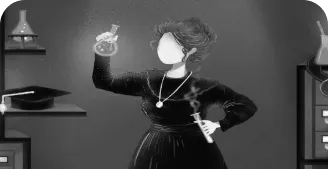
Biographies, novels, graphic novels: contemporary works tell the lives of researchers who remained in the shadows and place their discoveries back in the grand story of knowledge.
It is another way to write the history of science: more human, more just. We are not only talking about results, but about lives, contexts, and struggles.
Read also
Understanding the Matilda effect
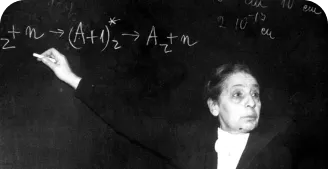
The Matilda effect describes a phenomenon: the work of some women scientists was minimized, attributed to others, or simply forgotten.
When names disappear
It is not only a matter of individual injustice: it is a cultural mechanism that shapes collective memory, textbooks, and the way we tell history.
The Matildas timeline
View the timelinesRestoring through writing
Writing about these women means resisting forgetting. Words and sentences become evidence: where institutions erased, literature remembers.
- Biographies: retrace a path.
- Novels: make an era tangible.
- Graphic novels: share it differently, more widely.
Stories devoted to Lise Meitner or Rosalind Franklin remind us that behind each discovery there is a person, an intuition, sometimes a struggle.
A bridge between science and culture
Science discovers, literature tells. By giving a place back to those who were erased, these works build another form of truth: that of memory.
And if truth always ends up being known, maybe it is because it always ends up being told.