
A film that glorifies the bomb
The film opens on focused faces, laboratories, spectacular explosions. Nuclear fission becomes a symbol of human ingenuity and military power.
But there is a shadow: by glorifying the bombs of Hiroshima and Nagasaki, the documentary acts as a screen, obscuring the horror in favor of a scientific triumph.
See also

Science at the service of politics
Nothing in Atomic Power is left to chance. Solemn voice-over, heroic music, rhythmic editing: every shot is a political gesture.
This glorification of nuclear power comes with a scientific seal of approval. The narrative erases victims and gives the bomb the appearance of a solution.
Even in its staging, science is no longer neutral: it becomes an argument.
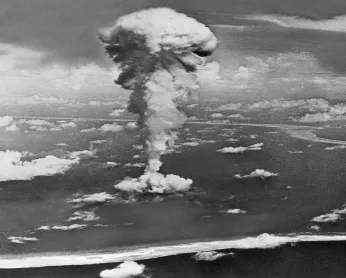
Nuclear power in cinema
Cinema quickly seized on nuclear power: a symbol of destruction, but also fascination.




Science has given us the power to transform the world, but not always the wisdom to guide it.
An ambiguous legacy
Atomic Power is not just a period film: it is the mirror of a generation convinced it could dominate the world through science.
It shows that science, when serving a political narrative, can become a story - a truth.
Between fascination and danger, the documentary reveals the permanent tensions of nuclear power. Even after the roar of the bomb, the question remains: how do we ensure science remains progress?